I got that one with my old 40d and a 50 mm 1.4 (captured at 1.8). The bird flew arround for a while and I knew my gear is to slow to capture him, so I started to focus on one of these flowers….I thought, maybe I get lucky and he will fly close to that one. Ten seconds later I got that shot:
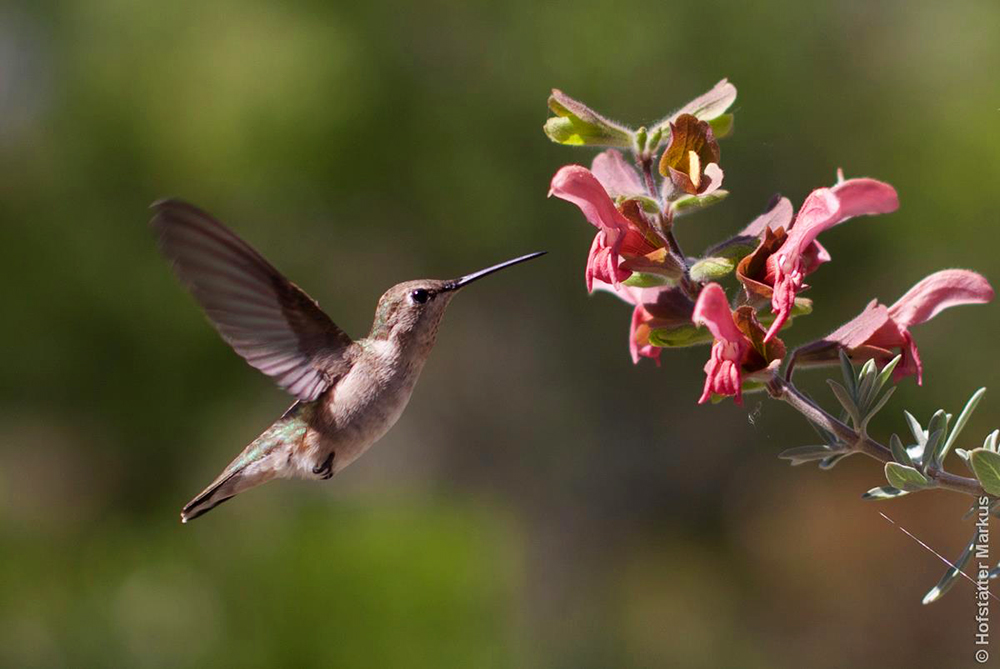
Captured at the Pasadena flower garden.


Hummingbird Moth Friends, I shot this very restless moth in the little garden in front of our house at my native place in Chamba, Himachal Pradesh. The marigolds were in full bloom and numerous insects including this Hummingbird Moth were having a good time on them. This moth hovers over flowers only for the briefest of moment and out of many shots I took, only this one looked passable to me. I wish I had selected the sports mode for shooting this picture and got its wings visible. But then wishes,as they say, are not horses that every fool can ride. Please forgive me for the shortcomings in the picture; this is my first-ever shot of this insect and I am excited about it. Here is a note from Wiki: The Hummingbird Hawk-moth (Macroglossum stellatarum) is a species of hawk moth with a long proboscis, and regularly hovers, making an audible humming noise. These two features make it look remarkably like a hummingbird when it feeds on flowers, a result of convergent evolution. It flies during the day, especially in bright sunshine, but also at dusk, dawn, and even in the rain, which is unusual for even diurnal hawkmoths. Its visual abilities have been much studied, and it has been shown to have a relatively good ability to learn colours. Distribution The Hummingbird Hawk-moth is distributed throughout the northern Old World from Portugal to Japan, but is resident only in warmer climates (Portugal, Spain, Germany, Italy, Greece, Turkey, North Africa, and points east). It is strongly migratory and can be found virtually anywhere in the hemisphere in the summer. However, it rarely survives the winter in northern latitudes (e.g. north of the Alps in Europe, north of the Caucasus in Russia, etc.). Moths in the Hemaris genus of the family Sphingidae are known as “hummingbird moths” in the US, and “bee moths” in Europe, which sometimes causes confusion between this species and the North American genus. Thanks for looking.