
When most people think about retouching photos, they immediately think of Photoshop. But long before computers, artists and photographers depended on their hands, their eyes, and clever mechanical devices to retouch their images. In this article, I’ll walk you through my process with an antique retouching desk, retouch a collodion wet plate glass negative, and finally, make a beautiful salt print from it.
The Antique Retouching Desk: A “Time Machine” for Photographers
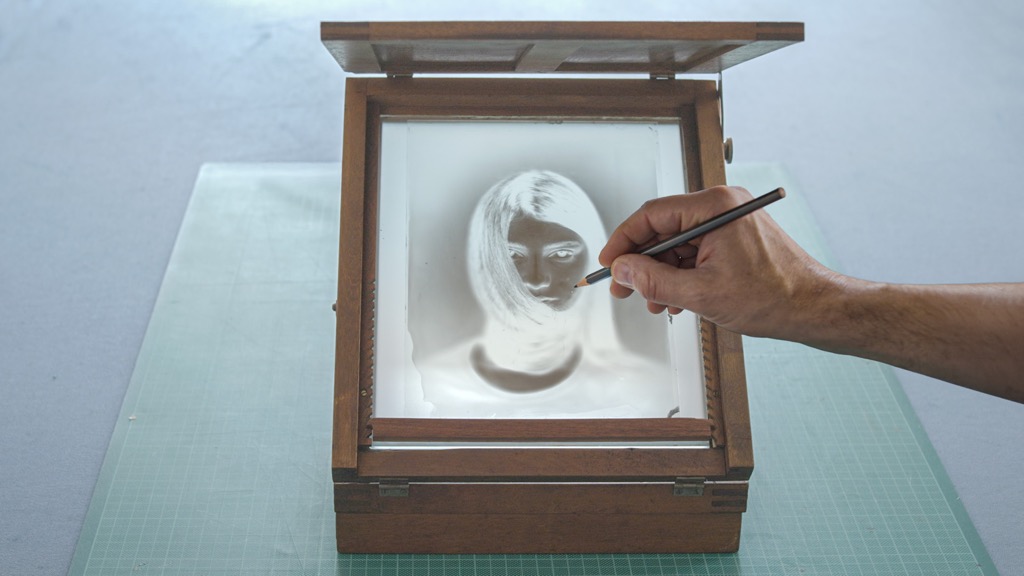
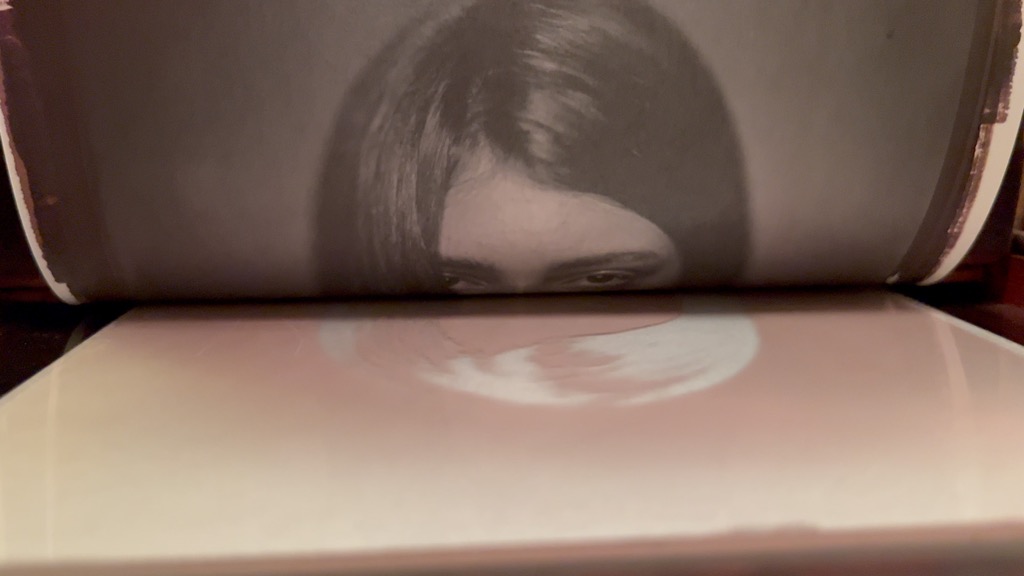
The retouching desk I use dates back to the late 19th and early 20th century. As beautiful these desks are as clever are they designed. With just a little bar, I can move my glass negative up and down, and a rear mirror lets me finetune the light reflecting through the photograph, making details easier to see and correct. It’s a joy to own one of these “time machines”.
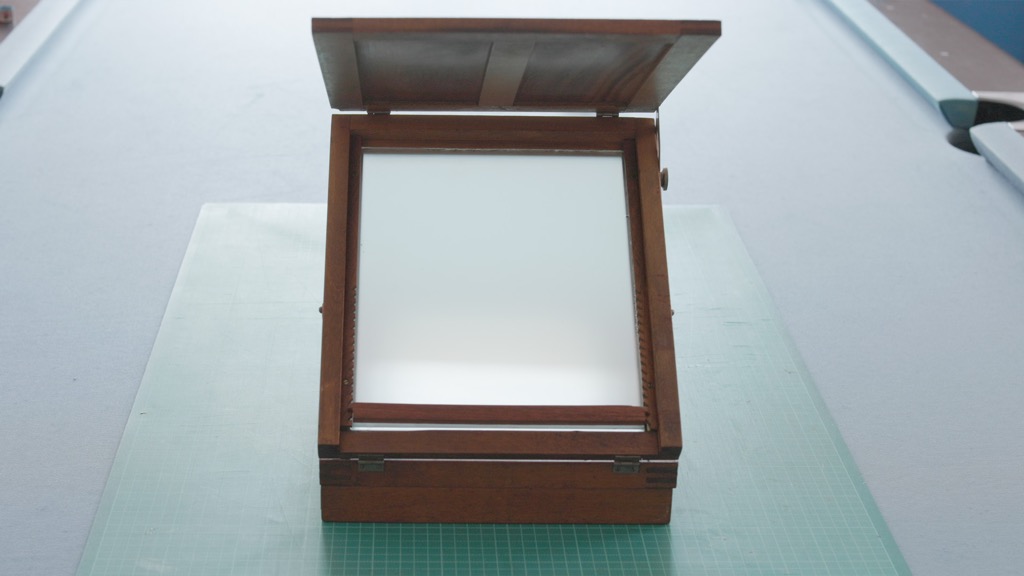
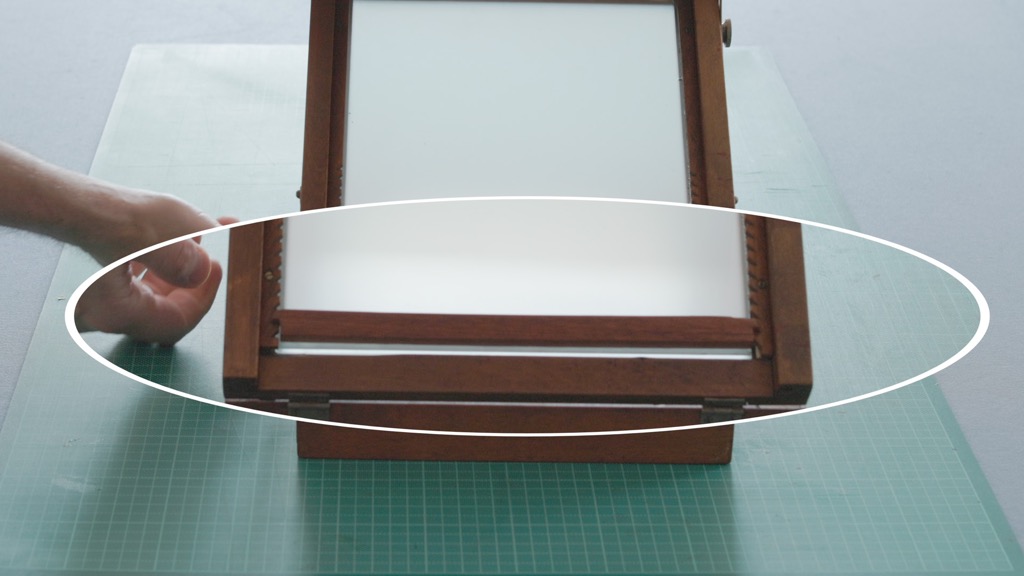
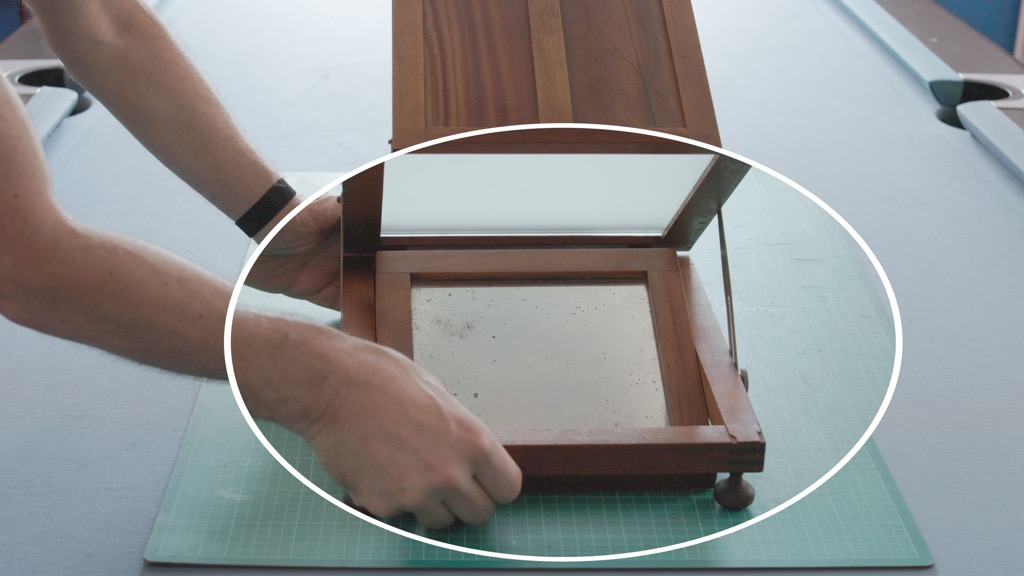
Contrary to what some say about the “good old days” before Photoshop and digital manipulation, photographers have been retouching images for well over a century. If anyone doubts, just point them to resources like my article here or to this website: https://mywebvault.wordpress.com/2016/10/29/how-photo-retouching-worked-before-photoshop-mental-floss/
I also own a collection of retouched glass negatives, this proves that retouching is as old as photography itself and it will always be part of it. Even iconic images, like Dennis Stock’s portrait of James Dean in the rain, were shown and discussed at an exhibition at the Foto Arsenal in Vienna to demonstrate darkroom magic. Here is another great article about it: https://petapixel.com/2013/09/12/marked-photographs-show-iconic-prints-edited-darkroom/
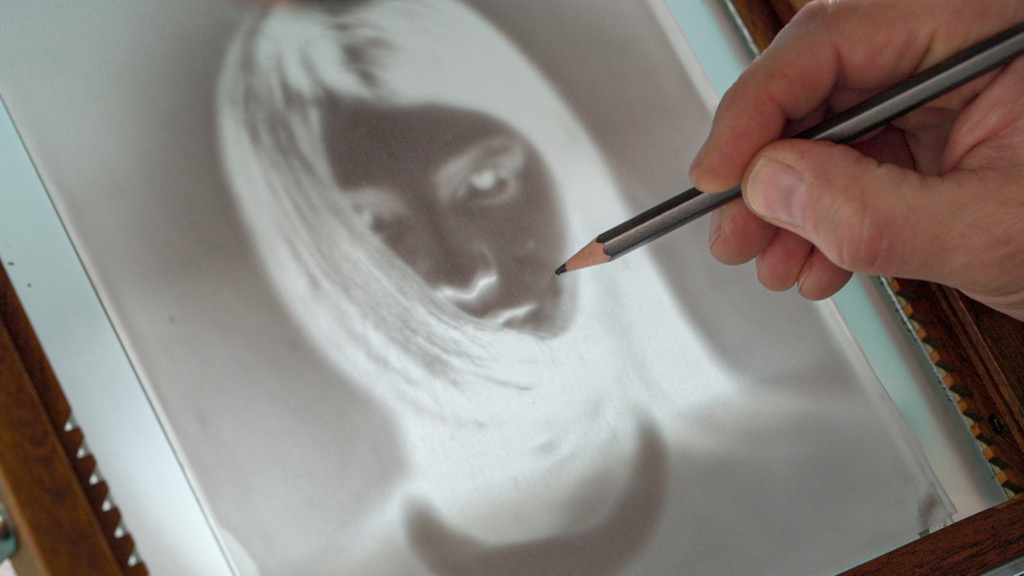
My Process: Retouching a Wet Plate Collodion Negative
For this project, I retouched a wet plate collodion negative from my “Emily, Portraits of Hope” series—a body of work with a strong narrative behind it. Instead of working directly on the glass negative, I glued tracing paper to the plate’s surface using a removable glue. Just a drop of gum in each corner, spread carefully, makes the tracing paper easy to remove later. Once dry, I cut the edges and began retouching. This is my very first time!
From Negative to Print: Creating a Salt Print
After retouching, I created a salt print. Here’s a quick overview
- I prepare a gelatin-based salt solution, let it soak, dissolve, and add ammonium chloride.
- I like to use Hahnemühle Platinum Rag paper, but any acrylic paper will work just fine
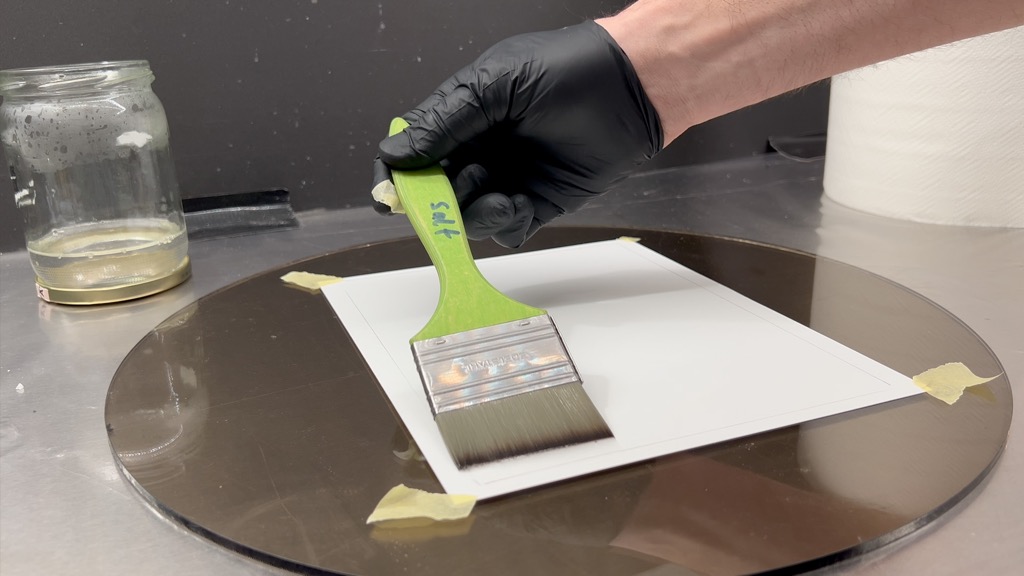
- I attach the paper to a glass plate with removable tape, and mark a border for coating.
- Then I apply the salt solution, let it dry, and then coat with a silver nitrate solution.
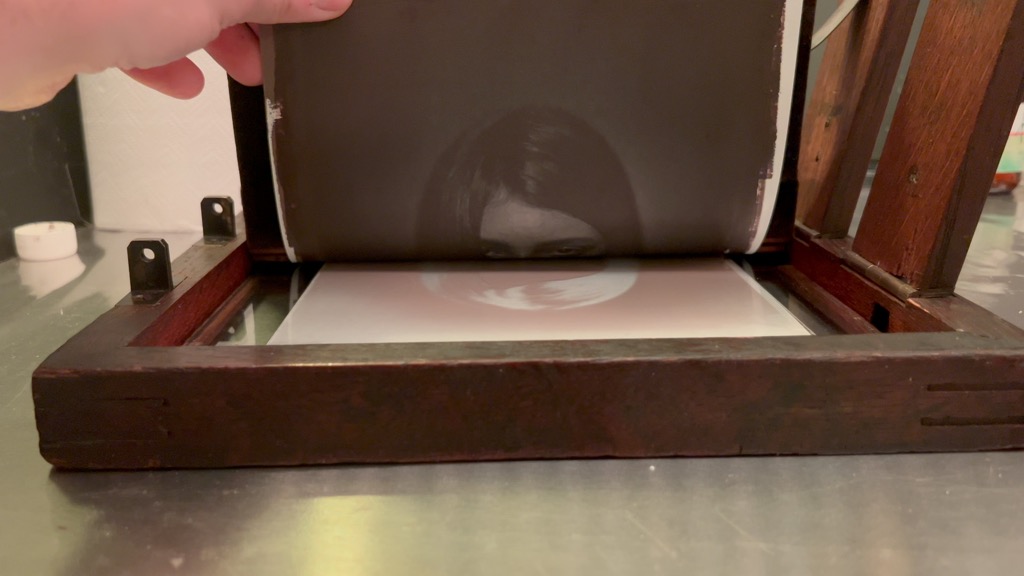
- After the paper is prepared, I sandwich the retouched negative and sensitized paper in a copy frame and expose it to sunlight.
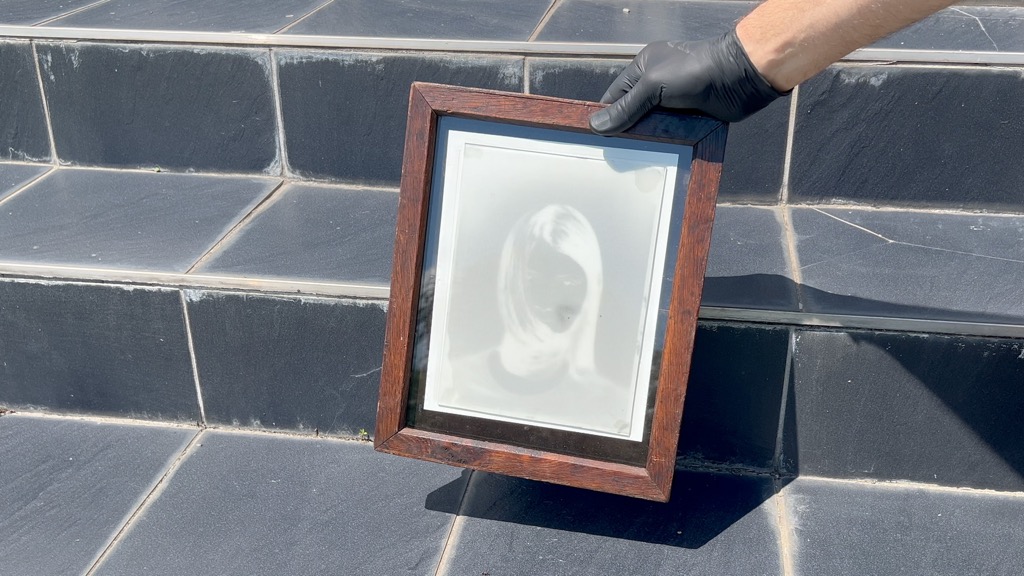
- I enjoy monitoring the print in between, it’s so nice to see the print come along.
Finishing the Print: Washing, Toning, and Fixing
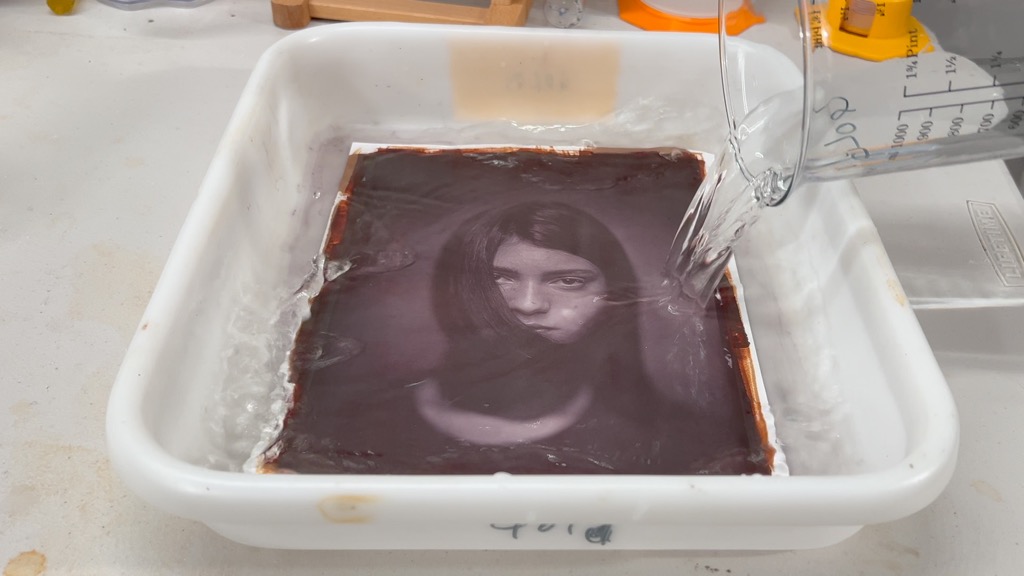
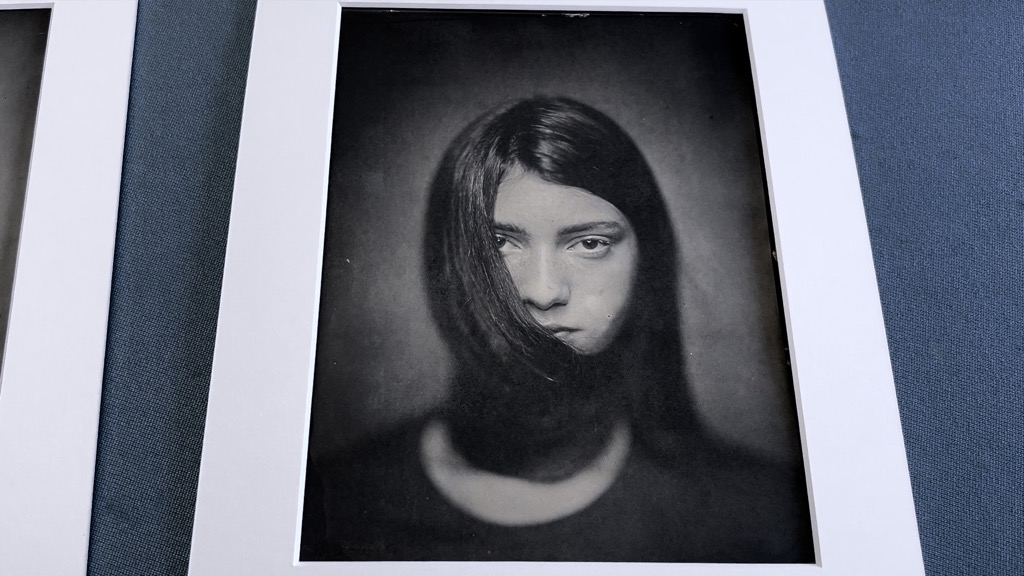
After the exposure is done, the print is washed, gold toned, and fixed. The result is richly toned salt print. Every single one is unique and the product of both chemistry and my hands. I am sure I can improve my retouching, but the organic feeling and the depth is impossible to reproduce using just software.
Retouching really is timeless. Sure, Photoshop is amazing, but it all started with people experimenting and getting creative with their own hands. Whether you’re tweaking images on a computer or sitting at an old desk with a glass negative, the goal is the same ->make a photograph just a little bit better. Processes like salt prints, collodion negatives, and retouching desks just show how much craftsmanship and creativity there is in the process. For me it’s much more rewarding then working with photoshop. Of course I use digital tools as well, like to create the video or to retouch my digital portrait work. But once you went full analog it changes you and it also changes how you capture and retouch digital images.


